In Praise of the Mended Jug: Why a Crack Can Be Half the Charm

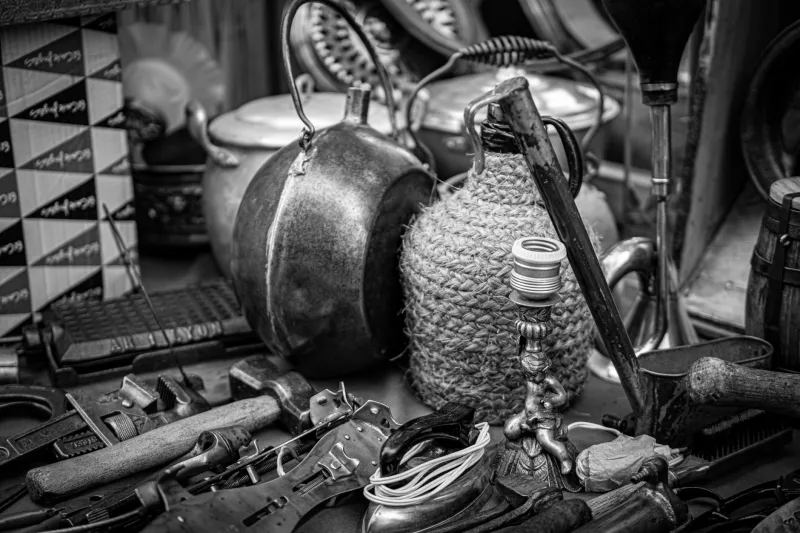
Photo: G.dallorto, Attribution, via Wikimedia Commons
I watched a woman put down a creamware jug at a fair last month because the spout had a chip. It was £18. It had been repaired, once, properly, with a pair of metal rivets set into the body, and the repair had held for long enough that the surrounding glaze had worn to the same soft satin as the rest of it. She said she wanted 'a good one'. She would have paid £75 for a good one, and it would have told her nothing at all.
This is the hill I am prepared to stand on. The battered things are better.
The jug that started the argument
My own gateway drug was a Victorian jug, badly chipped, with a hairline running down one side and a base that wobbles by two millimetres. It came from a house clearance in Bollington and cost me the price of two coffees. It holds flowers better than anything I own, because it is wide enough that a bought bunch looks like it grew there. It has been in three kitchens. Every visitor picks it up.
A perfect example of the same jug sits in a cabinet somewhere, unhandled, valued and unloved. There is no competition.
Wear is a document
Damage records things. That is the great advantage the battered object holds over the pristine one.
Rubbed gilding means a piece was held every day; a worn handle, a softened rim, a thumb-scallop in a pewter tankard — all of it is evidence of human contact over decades. Staple and rivet repairs, the kind the trade calls 'china mending', speak of a time when objects were too expensive to replace and too well made to throw away. Faded textiles tell you where the sun came in. A wonky handle on hand-thrown pottery tells you it was made on a Monday morning by somebody who had other things on their mind.
Crazing on an old dish, that fine crackle in the glaze, is the mark of a body that has expanded and contracted with the temperature of a hundred winters in an unheated kitchen. These are not defects to be haggled away. They are the object telling you what happened to it.
Drawing the line: honest wear versus hidden trouble
None of this means buying blindly. Some damage is charming and some is a liability, and the two can look nearly identical across a fairground table. A rough guide:
Welcome nibbles and chips to rims, feet and undersides; spotty crazing without staining; rubbed decoration; patina and softened edges on wood; old, tidy repairs in period materials; dead woodworm (holes with rounded, darkened edges and no fresh dust); replaced hinges, knobs and handles from the correct era; fading and honest mending on textiles.
Avoid hairline cracks that run through the body of anything meant to hold water — these will spread and can let go; disguised restoration, especially overpainted china and filler sanded into furniture, where a UV torch will often show the join; active woodworm, which announces itself with sharp-edged holes and fine sawdust beneath; structural rust on metal; 'married' pieces sold as a pair that clearly never met; and late twentieth-century glue repairs that are already failing.
Two particular traps for local buyers. Faded textiles are usually fine, but silk can perish across the folds — hold it up to the window and any shattering in the threads will show as a pale line. And wooden pieces kept in a damp Cheshire outbuilding can look sound while hiding softness at the base; press a thumbnail into an inconspicuous corner and see what happens.
What to pay for other people's problems
Conventionally, a visibly damaged piece sells for 30–50% less than a good example, sometimes more if the damage is structural. That is a fair starting point.
But rarity beats condition every time. If you have seen three of a thing in ten years of looking, pay properly and stop haggling. If you have seen thirty, wait for the better one or buy the cheap one and enjoy it.
The question I ask before buying is not 'can this be restored?' It is 'would I like this if it were never restored?' If the answer is yes, the piece is worth its money. If the charm depends entirely on a repair you might one day get round to arranging, walk away — you won't.
Living with battered beauties
Display them like you mean it. That is the whole trick.
Use the chipped jug for flowers, with a small glass inside if the crack is through. Hang the faded quilt on a wall where the sun does not land directly on it, and let the pale side show. Stack the worn plates rather than hiding them at the back of the cupboard. Put the riveted bowl on a shelf at eye level, where the repair can be seen as the object it is — a small piece of engineering carried out by somebody competent, long before your time.
Group things. One battered jug on its own reads as a damaged jug. Six of them, in three materials and four decades, reads as a collection, and collections are their own defence. Add a little written note if you like — where it came from, what you paid — because provenance is half the interest and guests always ask.
And resist the urge to apologise. 'It's got a chip, sorry' is a sentence I have heard a hundred times in other people's houses about objects they clearly adore. There is nothing to apologise for.
The last word
The perfect antique is a museum piece that has somehow ended up in a domestic setting. The battered one is a domestic object that has earned its place. It has been used, dropped, sold, mended, kept and handed on, and the marks of all that are still visible if you know where to look.
Buy one this winter. Put flowers in it. Then try to tell me the shiny version would have been the better buy.