What a Grocer's Price Ticket Knows That a Mahogany Sideboard Doesn't
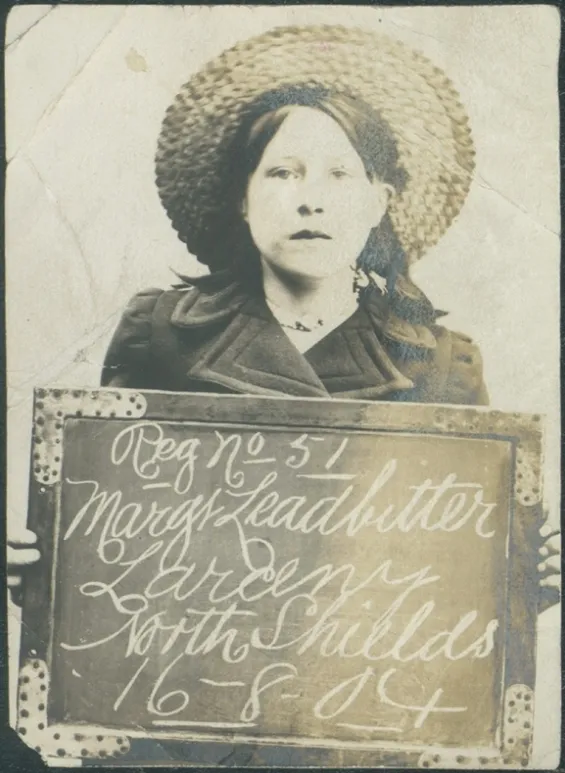
Photo: Tyne & Wear Archives & Museums, No restrictions, via Wikimedia Commons
By half past three on the last Sunday of November, the light over Macclesfield Market Place goes the colour of an old penny and the Treacle Market traders start folding their tables. That is the hour the paper comes out: shoeboxes, carrier bags, bundles held together with perished elastic. Most people walk straight past them towards the pie stall. They are missing the cheapest history in town.
A fortnight ago I handed over £4 for one such bundle: nineteen receipts, a chemist's label, two hand-written price tickets and a photograph of a shopfront with nobody standing in front of it. I have spent more time with that £4 than with most of the furniture in my house.
The bits nobody ever framed
Antiques get framed, insured and talked about. Ephemera gets swept up. And yet a billhead from a Chestergate grocer tells you things a sideboard never will: what a Macclesfield family actually ate, what it cost, whether the shopkeeper had a telephone, whether he had learned copperplate or just had a good printer. It is social history with a price on it — sixpence halfpenny for tea, a shilling for candles, a running account settled quarterly because nobody had cash on a Tuesday.
The grand stuff has been collected to death. Paper has not. You can still build a genuine, locally rooted collection for less than the cost of a decent lunch, and you will be the only person you know doing it.
What turns up, and what it costs
Local ephemera falls into a few rough families, and none of them are expensive:
- Shop paperwork — receipts, billheads with engraved shopfronts, order books, delivery notes, account statements. Usually £1–£5 each; a really handsome illustrated billhead from a named Macclesfield firm might make £15–£25.
- Price tickets and display cards — card written in ink or pencil, often with a brass or tin holder. A handful of these makes a lovely small framed group.
- Labels — chemists, grocers, dairies, and above all the silk trade: throwsters' delivery slips, dyers' sample cards, printed labels from the mills of Macclesfield, Bollington and Sutton. Silk material carries a premium because the local collectors are already awake to it.
- Tins and packaging — biscuit tins from the big names, tobacco and tea tins, printed paper bags. Condition rules here; a rusted-out tin is a plant pot, not a collectible.
- Tickets and handbills — railway tickets and timetables for the town's stations, cinema and theatre bills, church and school programmes, election leaflets, Co-op dividend checks, ration books.
Markets and fairs are the happy hunting ground. So are charity shops along Chestergate and Mill Street, where a framed print will be £20 and the box of old paperwork beside the door is 50p. House clearances are where the good bundles come from, and if you are polite, the auction houses will often let you rummage through the box lots after the sale.
Reading a date off a scrap of paper
Half the pleasure is working out when a thing was printed. A few reliable tells:
Money. Prices in shillings and pence mean before February 1971; anything stamped 'new pence' is 1971 or later.
Telephones. 'Macclesfield 2345' style numbers generally point to the years before the town moved onto the 0625 dialling code in the late 1960s. The 01625 prefix arrived in the mid-1990s, so anything carrying it is modern.
Addresses. A full postcode on a billhead suggests the 1970s at the earliest, more usually later.
Tax. A VAT number cannot predate 1973.
Print. Engraved borders and letterpress shout Victorian and Edwardian; typewriters say interwar to 1960s; offset litho and barcodes put you in the 1980s and beyond.
Wording. 'Telegrams: …' alongside a phone number is a lovely little window of roughly 1920 to 1955. Royal warrants help too — check which monarch is named and you have a bracket to work inside.
None of this is forensic. Age is the least interesting thing about a receipt anyway; the shop name, the street and the handwriting are the real content.
Keeping paper alive
Paper is fragile, but it is not difficult to look after. It simply objects to the same things you do — damp, sunlight, heat and being messed about with.
Do store your finds in acid-free sleeves and archive boxes, keep them cool and dark, and mount anything you want on the wall using photo corners or a Melinex sleeve rather than any kind of adhesive. Flatten creases under a gentle weight, never with an iron. Scan the best pieces at 600dpi and file them somewhere sensible. Write the provenance on the sleeve in soft pencil — where and when you bought it, what you paid — not on the item.
Don't reach for sellotape, glue, laminating pouches or rubber bands. Don't keep a shoebox in the loft or the garage, where the extremes will do the work of fifty years in one winter. Don't try to 'clean' foxing with anything wet. If a staple has rusted into the paper, leave it for someone with the right tools rather than tugging at it.
A shoebox of well-kept paper will outlive most of us. That is rather the point.
A collection you can keep under the bed
Once you have a few dozen pieces, a theme suggests itself. Everything from one street is the classic: a Chestergate collection, or King Edward Street, or the Market Place. Everything from one trade — dairies, chemists, grocers — is another. So is a single family name traced across thirty years of billheads, which is genuinely moving when it comes together.
The end result is not a display cabinet. It is a drawer, a shoebox, a small album: a paper ghost of a High Street that was busy long before any of us arrived. It cost less than a takeaway. It will keep you occupied for years. And unlike the sideboard, it will tell you a story you could not have guessed.